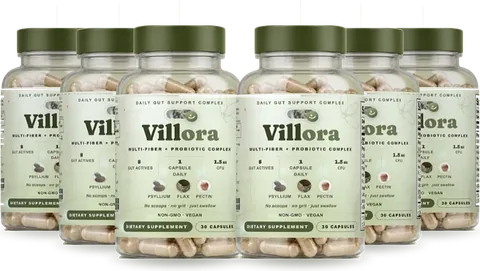
A fiber-rich grocery list starts with five anchors: beans or lentils, whole grains, fruit with skins, vegetables, and seeds or nuts. Shop the edges of the store first, then pick two items from each anchor group per week. Add a daily routine such as Villora, taken with breakfast and water, and the plan runs on autopilot.
Start with five anchors instead of a recipe pile · Walk the store in a fixed order · Make smart swaps at the shelf · Let the label do the comparing · A sample weekly list you can copy · Storage and budget habits that keep the list working
- Build the list around five anchor groups, not individual recipes.
- Pick two items per group each week to keep variety without overwhelm.
- Read the fiber line on labels and compare per serving.
- Pair food choices with a steady daily routine.
Start with five anchors instead of a recipe pile
Most grocery lists fail because they begin with dinners. Begin with categories instead. Five anchors cover nearly every fiber-forward plate: legumes, intact whole grains, fruit you can eat with the skin, vegetables of any color, and seeds or nuts.
Write those five headings at the top of your list and leave space under each. You are not planning meals yet. You are making sure the cart holds building blocks that can become a bowl, a wrap, a soup, or a snack depending on the week.
Walk the store in a fixed order
A repeatable route saves time and keeps impulse buys down. Many shoppers do well with this order:
- Produce first: two leafy items, two roots or crunchy veg, two fruits.
- Canned and dry aisle: one bean, one lentil or chickpea, one whole grain such as barley or brown rice.
- Bulk bins or baking aisle: one seed, one nut.
- Frozen section: a bag of berries and a bag of mixed vegetables as backups.
- Dairy case last: plain yogurt or another cultured option.
Ready to start your routine?
Villora: a vegan multi-fiber + probiotic capsule, one a day, with a 60-day money-back guarantee.
Order Villora NowMake smart swaps at the shelf
You do not need a new diet, only slightly better versions of what you already buy. Choose bread with a whole grain listed first, swap white rice for a mixed grain blend, and pick whole fruit over juice. Canned beans work just as well as dry ones; rinse them and you save an hour.
The USDA FoodData Central database lists fiber for thousands of foods, which makes it easy to compare two products before you commit. Five minutes of looking things up at home pays off all month.
Let the label do the comparing
Flip the package and find the dietary fiber line. Compare it per serving, and check the serving size so you are comparing like with like. Our guide to reading a nutrition facts label for fiber walks through the details.
If you want a daily anchor that does not depend on what happens to be in the cart, Villora is a capsule that the brand describes as a multi-fiber and probiotic complex for everyday gut support. The brand's directions are one capsule a day, preferably with breakfast, with water. You can see how it is put together on the how Villora works page.
A sample weekly list you can copy
Here is a plain template to adapt. Swap in whatever looks fresh and fits your budget.
Legumes: black beans, red lentils. Grains: rolled oats, brown rice. Fruit: pears, apples, frozen berries. Vegetables: broccoli, carrots, spinach, cabbage. Seeds and nuts: chia, almonds. Cultured: plain yogurt. Round it out with herbs, lemons, and whatever spice jar is nearly empty. That single list feeds lunches, dinners, and snacks without a recipe in sight.
Storage and budget habits that keep the list working
A list only helps if the food survives the week. Wash and dry leafy greens, then store them in a container lined with a paper towel. Cut carrots and cabbage into sticks and wedges on the day you shop so they are ready to grab. Keep cooked grains in flat, shallow containers so they cool quickly and stay fresh for several days.
On the budget side, compare the unit price printed on the shelf tag rather than the sticker price. Store brands of beans, oats, and frozen vegetables are usually just as good as the pricier labels, and they free up room in the budget for the fruit and nuts that make meals feel special. Check the weekly flyer, but only for items already on your five-anchor list.