Dietary fiber is the part of plant foods your body does not digest the way it digests starch or sugar. Soluble fiber dissolves or swells in water, insoluble fiber stays more structural, and prebiotic fibers are the ones gut microbes use as food. Most whole foods contain a mix, which is why a multi-fiber approach is common.
Fiber is a family, not one thing · Soluble fiber: the water lovers · Insoluble fiber: the structure builders · Prebiotic fiber: food for gut microbes · Reading a multi-fiber label · Practical habits that help any fiber routine
- Fiber is a family, not a single substance.
- Soluble fiber swells in water; insoluble fiber adds structure; prebiotic fibers feed gut microbes.
- Most plant foods contain several kinds at once.
- Water and variety make any fiber routine easier to live with.
Fiber is a family, not one thing
Ask ten people what fiber is and you will hear ten versions of the word roughage. The reality is more interesting. Dietary fiber covers many plant compounds that share one trait: your digestive enzymes do not break them down the way they break down starch or sugar.
Scientists sort them in a few overlapping ways, by how they behave in water, by how thick they get, and by whether gut microbes ferment them. Those categories blur at the edges, and the same food usually belongs to more than one. Think of the categories as handy lenses, not sealed boxes.
Soluble fiber: the water lovers
Soluble fiber dissolves or swells when it meets water, often forming a gel. You can see the effect in a bowl of oatmeal that thickens as it sits, or in chia seeds that plump up in a glass of liquid.
Common sources include oats, barley, beans, lentils, apples, citrus, and flax seed. Some soluble fibers are described as viscous, meaning they turn thick and gel-like. Others dissolve more thinly. For general information on how fiber fits into eating patterns, the American Heart Association's website has accessible overviews.
Ready to start your routine?
Villora: a vegan multi-fiber + probiotic capsule, one a day, with a 60-day money-back guarantee.
Order Villora NowInsoluble fiber: the structure builders
Insoluble fiber does not dissolve in water. It forms the structural parts of plants, such as the skins of fruit, the bran of whole grains, and the stringy bits of vegetables like celery. Think of it as the scaffolding that gives plant foods their crunch.
Good sources include whole wheat, brown rice, nuts, seeds, the skins of potatoes and apples, and leafy greens. A varied plate tends to supply both kinds without any planning, which is one reason nutrition guidance leans on whole foods first.
- Soluble: oats, beans, apples, citrus, flax
- Insoluble: wheat bran, brown rice, nuts, vegetable skins
- Often both: lentils, berries, whole grain bread
Prebiotic fiber: food for gut microbes
Prebiotic is a job description rather than a plant category. A fiber earns the label when gut microbes can use it as fuel. Many soluble fibers qualify, and so do some compounds found in onions, garlic, leeks, bananas, and chicory.
It pairs neatly with probiotics, which are live microorganisms. A simple way to remember the difference: probiotics are the guests, and prebiotics are part of the meal the guests enjoy. That pairing is the thinking behind the phrase fiber plus probiotic.
Reading a multi-fiber label
A multi-fiber product aims to cover several textures and sources in one serving instead of leaning on a single ingredient. When you read a label, look for named ingredients rather than vague terms, and check that the directions are clear and easy to follow.
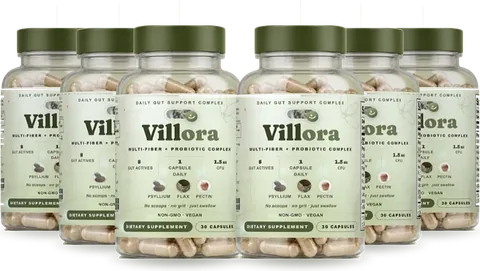
Villora™ is an example of the multi-fiber approach, with a probiotic added. The brand lists eight ingredients and positions the capsule as daily gut support and digestive wellness; amounts per ingredient are not given on this site. The Villora formula page shows the lineup, and How Villora Works explains the daily routine.
Practical habits that help any fiber routine
Variety beats volume. Rotate the grains, fruits, and vegetables on your plate across the week. Drink water steadily through the day, because fiber works alongside fluid. And build changes gradually; a sudden jump in any single food rarely feels as comfortable as steady additions.
To compare the fiber content of specific foods, USDA's FoodData Central lets you look up almost anything in your pantry.