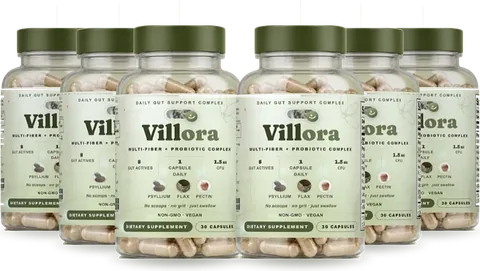
CFU stands for colony-forming units, the standard count of live microorganisms on a probiotic label. A billion CFU sounds enormous, but microbes are tiny, so the numbers run large. The count is one clue among several: the species, the strain, and the directions matter too. Villora™ lists Lactobacillus acidophilus at 1.5 billion CFU.
Where the term comes from · Why the numbers look so big · The name behind the number · Other things worth a look on the label · How Villora presents its probiotic · Putting the number in context
- CFU means colony-forming units, a measure of live, active microorganisms.
- Labels use billions because microbes are microscopically small.
- The species and strain named on the label matter as much as the number.
- Villora lists Lactobacillus acidophilus at 1.5 billion CFU, as stated by the brand.
Where the term comes from
CFU is borrowed from the microbiology lab. To count live microbes, a technician spreads a diluted sample on a dish of nutrients and waits. Each living cell, or small cluster of cells, multiplies into a visible dot called a colony. Count the colonies and you have a count of units that were alive and able to grow.
That is the heart of the term. Colony-forming units count the microbes that are alive and active, not simply every cell present. It is a more meaningful figure than a raw particle count, which is why probiotic labels use it.
Why the numbers look so big
A single bacterium is thousands of times narrower than the width of a hair. A dose of the live cultures you can fit in a capsule therefore contains a staggering number of individual cells. Labels commonly show hundreds of millions to tens of billions.
So when a label says 1.5 billion CFU, the number is not unusual in scale. It is simply the way the field counts. Seeing a large number should prompt curiosity, not awe. The more useful question is what is being counted.
- Million: 1,000,000
- Billion: 1,000,000,000
- 1.5 billion: 1,500,000,000
Ready to start your routine?
Villora: a vegan multi-fiber + probiotic capsule, one a day, with a 60-day money-back guarantee.
Order Villora NowThe name behind the number
Probiotic labels ideally name the genus, species, and sometimes the strain. Lactobacillus is the genus, and acidophilus is the species. Together they give Lactobacillus acidophilus, a well-known bacterium that has been studied and used in foods and supplements for a long time.
Two products with identical CFU counts can contain very different organisms. That is why the name on the label deserves as much attention as the number. A strain code, when printed, is the most precise identifier of all, similar to a model number on an appliance.
Other things worth a look on the label
Alongside the count and the name, scan for the supporting details that shape the daily experience. Simple directions help a routine run smoothly, and clear statements about the format give you a feel for what you are buying.
The FDA's dietary supplements page explains how supplements are labeled in the United States and is a handy reference for reading any product.
- The genus, species, and strain, if listed
- The CFU count and the serving it refers to
- Directions for use
- The format, such as a vegetable capsule
- Manufacturing standards the brand states
How Villora presents its probiotic
The brand lists Lactobacillus acidophilus at 1.5 billion CFU among the eight ingredients in the formula, alongside a set of fibers. The capsule is directed as one a day, preferably with breakfast, with water.
The fibers and the culture are meant to work as a pair in the brand's positioning of daily gut support and digestive wellness. You can read the ingredient list in full on the Villora formula page, and the overview at How Villora Works covers the routine.
Putting the number in context
CFU is one input among many. A good approach is to view it as a data point that tells you the label is counting live cultures, then move on to the other questions: what organism, what format, what directions, and how it fits your day.
If you decide to try a product, build it into an easy habit. The pricing page lists the pack options and the 60-day money-back guarantee.